The Atlanta lawn, honestly described
Lawns in Atlanta grow in USDA zones 7b to 8a, through long, humid warm seasons, mild winters with occasional hard freezes. The standard turf is Bermuda and zoysia in full sun, tall fescue in shade, a true transition-zone mix, and the ground underneath is Georgia red clay, acidic and prone to compaction and erosion on slopes. Those three facts, grass, soil and climate, decide nearly everything about lawn care here: when to feed, when to aerate, how high to mow, and which problems to expect before they appear.
Atlanta runs two lawn calendars at once: Bermuda lawns wake in spring and sleep in winter, while fescue lawns are rebuilt every fall and defended through summer.
On red clay slopes, watering slowly matters; fast water runs off downhill instead of soaking in.
From the Atlanta field notes
Drive one street in Sandy Springs or Dunwoody in January and you can read the grasses from the curb. One yard is tan and dormant, the next is deep green, and a third is green under the trees and tan in the open front corner. That patchwork is Atlanta lawn care in a single view. This metro sits where warm season and cool season grasses both work and both fail, depending on sun, shade, and season. Good care here starts with naming the grass honestly, because Bermuda, zoysia, and tall fescue each want a different calendar, a different feeding rhythm, and different expectations for summer and winter.
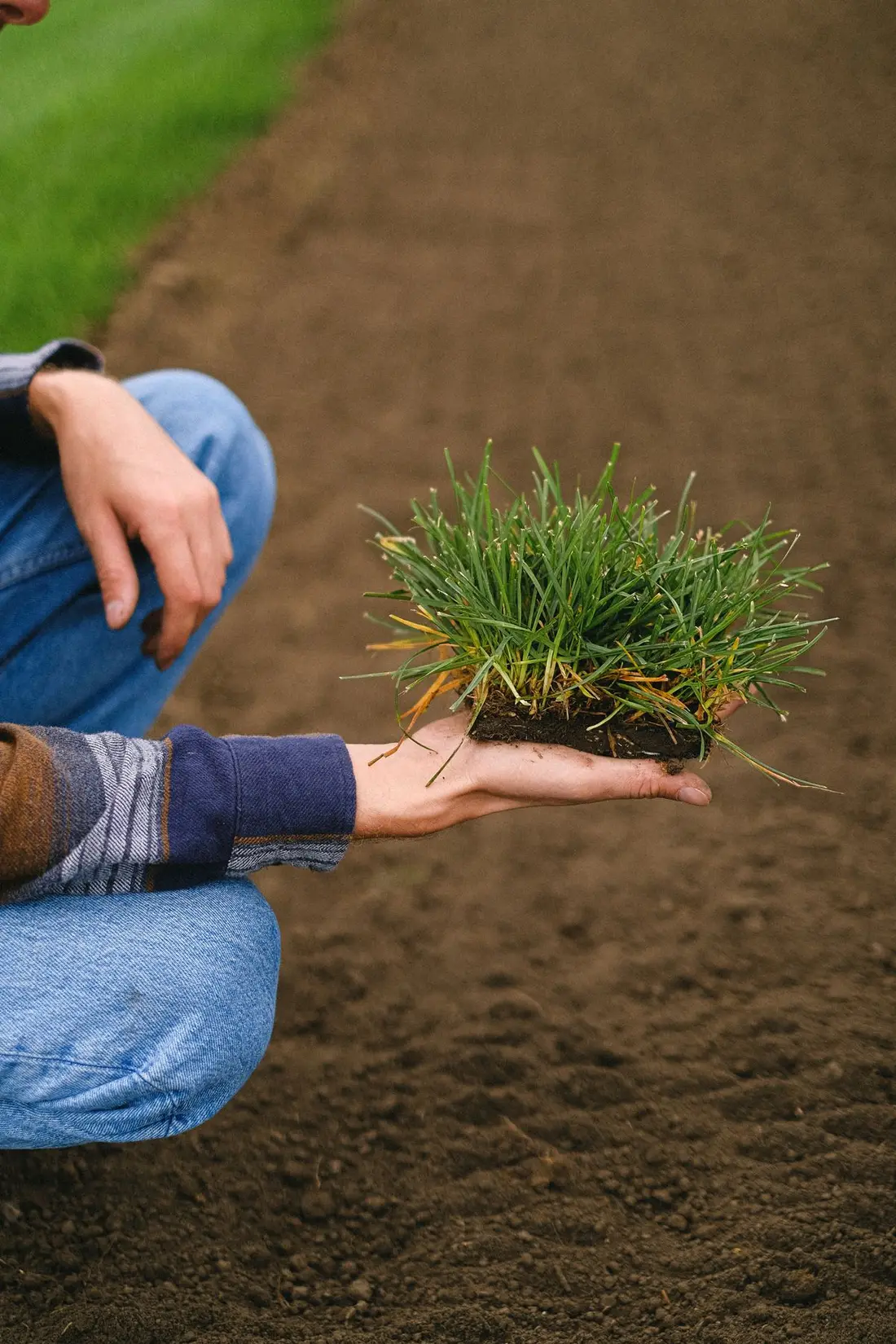
Every Atlanta lawn conversation eventually reaches the soil, because the red clay underneath decides so much of what happens above it. This Piedmont clay gets its color from iron oxide, tends to run acidic, and is low in organic matter compared with the loamy soils in gardening photos. Wet, it can hold moisture well. Dry and compacted, it can seal so tightly that a hard summer storm runs off a lawn that is actually thirsty. Lawns here benefit from soil testing before guesswork, aeration where traffic has packed the ground hard, and steady habits that protect the surface instead of leaving bare clay exposed to the next downpour.
Bermuda is the sun lover of Atlanta turf, and in a full sun Perimeter front yard with summer heat on it, few grasses look better or recover faster. It spreads by runners, handles foot traffic well, and turns a worn patch into closed turf during the growing season if water and food are steady. Its limits are just as clear. Bermuda thins in shade, goes tan from late fall into spring, and can show dead spring circles where spring dead spot has worked on the roots. Kept in open sun, cut steadily, and fed in its late spring and summer window, it earns its place.
Under the oak canopy that shades so much of Sandy Springs and Dunwoody, tall fescue is often the only turf that makes sense. It stays green when Bermuda is dormant, feels cooler underfoot, and holds a wooded lot together through winter when warm season lawns are tan. The bargain comes due in summer, when heat and humidity thin even a healthy stand and damp shade invites disease. Fescue owners in Atlanta do best when they plan for that rhythm instead of fighting it: taller mowing, careful summer watering, and a real fall rebuilding season with aeration, seed, and feeding each year.
Late summer in Atlanta has a warning sign that experienced lawn owners learn to watch for: birds gathering on the turf at odd hours, working one section of grass with unusual focus. Fall armyworms often follow, and from mid July into early fall they can chew a green Bermuda lawn into brown stubble with startling speed. The damage looks like drought from the street, which is why close scouting matters in August and September. Ragged blades, expanding brown edges, and caterpillars confirmed near the surface are the real signals. Established lawns frequently regrow once feeding stops, but the yards that recover best are the ones checked early.
Atlanta lawn questions
Should my Atlanta lawn be Bermuda, zoysia, or tall fescue?
Start with sun, not preference. Full sun front yards in the Perimeter area often suit Bermuda or zoysia, while yards under the heavy tree canopy common in Sandy Springs and Dunwoody usually hold tall fescue better. Many Atlanta homes honestly need both, with a warm season grass in the sun and fescue in the shade.
Why is my neighbor's lawn green in winter while mine is tan, or the other way around?
That is normal in Atlanta and usually just means you have different grasses. Tall fescue stays green through winter, while Bermuda and zoysia go dormant and turn tan until spring green up. Neither lawn is necessarily healthier. The care calendars for the two types are almost opposite.
When is the best time for aeration on my lawn?
It depends on the grass, which is the Atlanta rule for almost everything. Tall fescue aeration is best in fall, from September into mid October, when new fescue seed establishes most reliably. Bermuda and zoysia aeration is best while they are actively growing in late spring and summer, when they can recover quickly.
Why does my fescue look great in spring and thin out every August?
Heat, humidity, shade, and summer disease pressure wear tall fescue down in Atlanta, even on well kept lawns. Cutting it too short or letting leaves stay wet overnight makes the decline worse. Fall aeration and fall fertilization rebuild density and help new seed fill thin areas, and most local fescue lawns need that cycle repeated each year.
What are the brown circles in my Bermuda that never green up in spring?
Well defined dead circles that stay bare while the rest of the Bermuda greens up in April fit spring dead spot, a fungal problem that works on roots in fall and spring. Weeds often fill the circles first, and recovery is slow because living runners have to grow inward. Have the lawn looked at in fall as well as spring, since management timing is not only a spring issue.
How do I know if armyworms are eating my lawn in late summer?
Look for ragged, chewed blades, brown patches that expand quickly, and unusual bird activity on the turf in August and September. A soap and water flush poured over a small suspect patch can bring caterpillars to the surface for confirmation. Bermuda is hit especially hard in outbreak years, and catching feeding early matters because damage can spread in days.
How often will my lawn need mowing in an Atlanta summer?
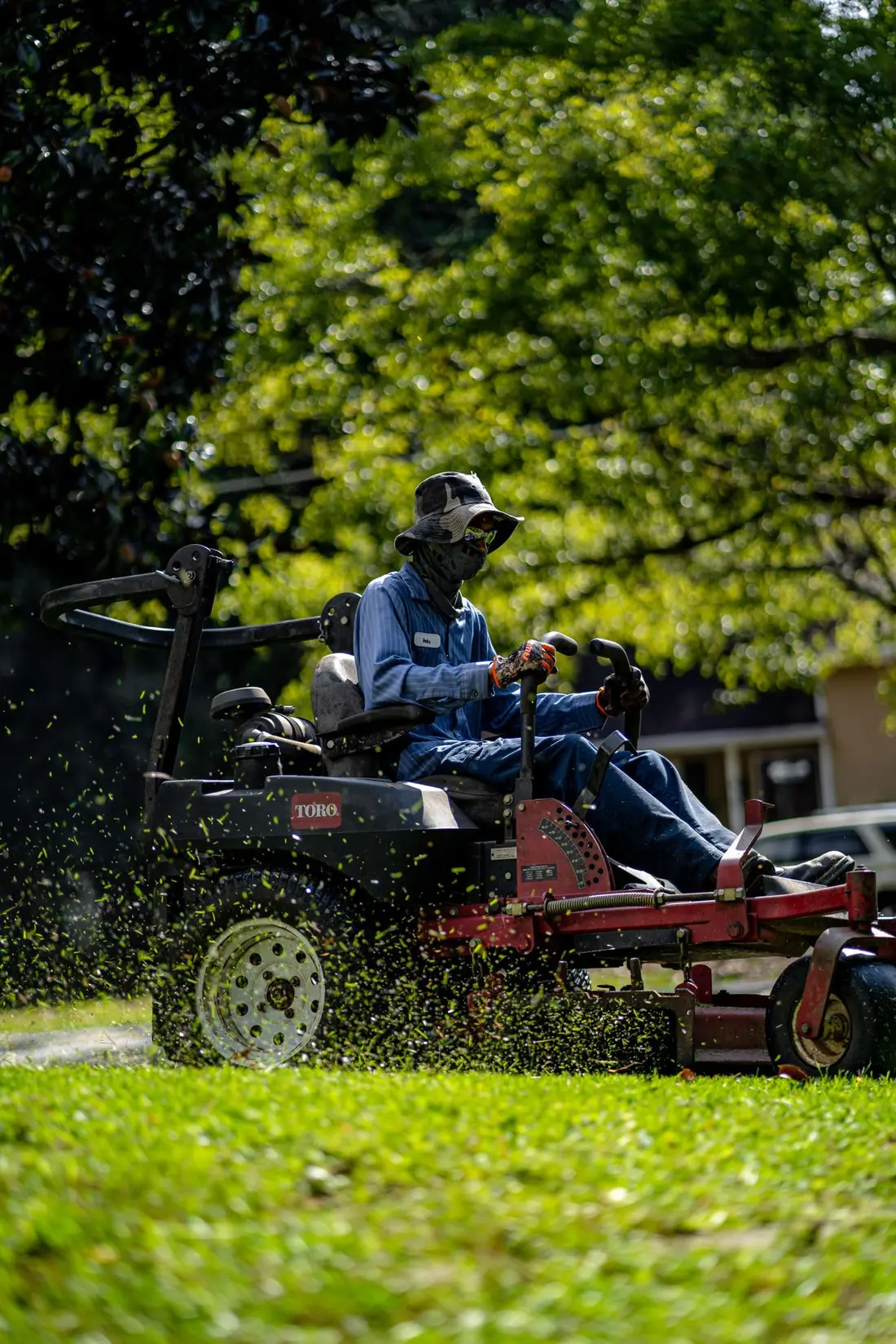
Actively growing Bermuda in a wet June or July can need lawn mowing weekly or more, while zoysia grows a little more slowly. Tall fescue grows fastest in spring and fall and slows in summer heat. Seasonal clean-ups between regular visits help after storms, which drop limbs and debris often in this metro.
What does fertilization timing look like for Atlanta lawns?
Warm season lawns are fed from late spring through mid summer, once growth is active and soils are warm. Tall fescue is fed mainly in fall, with October and November an important window, plus lighter spring attention. Feeding either type on the other type's schedule wastes money and can increase disease or weak growth.