The Dallas-Fort Worth lawn, honestly described
Lawns in Dallas-Fort Worth grow in USDA zones 8a to 8b, through long, hot summers with stretches over 100 degrees, mild winters and a spring storm season. The standard turf is Bermuda and St. Augustine, with zoysia in some shaded yards, and the ground underneath is heavy black clay that swells when wet and cracks when dry. Those three facts, grass, soil and climate, decide nearly everything about lawn care here: when to feed, when to aerate, how high to mow, and which problems to expect before they appear.
Spring green-up and pre-emergent timing, summer watering discipline, and fall recovery define the DFW lawn year.
Many DFW communities run twice-weekly watering schedules in summer, so deep, infrequent watering on allowed days matters more than daily sprinkles.
From the Dallas-Fort Worth field notes
July heat in Dallas-Fort Worth changes what a good lawn routine looks like. With average highs near ninety six degrees and nights that stay in the upper seventies, Bermuda and St. Augustine are growing in survival mode by midday. Lawns that were cut too short in June show it first, as thin areas bake over hot clay and footprints linger in wilted grass. Keeping blades sharp, holding St. Augustine taller, and watering deeply on allowed mornings gives roots a chance to work below the hot surface instead of chasing moisture that evaporates before noon each day.
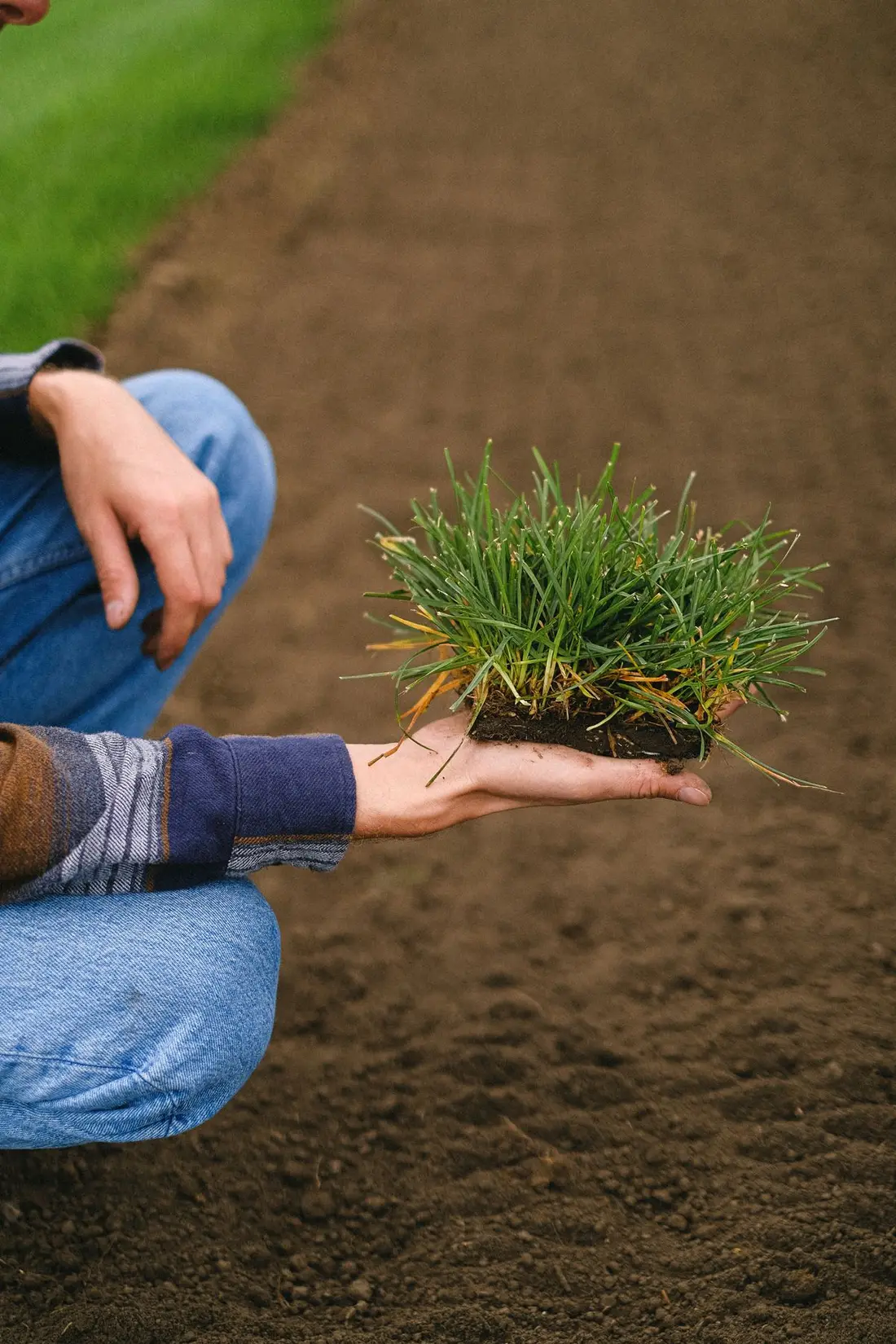
Black clay decides how almost every DFW yard behaves. This vertisol soil swells tight when spring storms soak it, then shrinks and splits into deep cracks during a dry August stretch. Roots live inside that movement, which is why a lawn can look flooded on Monday and drought stressed the following week without anything in the irrigation system changing. Consistent moisture helps more than occasional heavy soaking. Cycle and soak watering, aeration on compacted ground, and mulch over beds all work toward the same goal, keeping the clay from swinging so hard between its wet and dry extremes.
A healthy Bermuda lawn in DFW is built on sun, height discipline, and steady feeding during active growth. Give it six or more hours of direct light, keep it near one to two inches, and never scalp a tall spring canopy back in a single cut. Bermuda spreads by runners above and below ground, so a dense stand repairs itself from play damage and crowds out many summer weeds on its own. Where it fails, the cause is usually shade creeping in from a maturing tree, not a lack of effort from the mower each week.
St. Augustine earns its place in DFW yards by handling shade better than any other warm season option, but it asks for care in return. Keep it taller, around two and a half to three and a half inches, so its broad blades shade the runners and crowns below. Watch sunny edges near driveways in summer, because that is where chinch bugs often start in hot dry turf. Water it more thoughtfully than Bermuda, avoid late day watering that leaves blades wet overnight, and treat brown circular patches in spring and fall as a disease clue.
Watering a DFW lawn well is mostly a clay problem, not a sprinkler problem. The soil takes water quickly through cracks when it is dry, then seals and sheds water once it swells, so a single long cycle sends much of the run down the curb. Splitting each allowed watering day into short cycles with rest time between them lets moisture move into the root zone instead. About an inch a week including rain is a sound summer planning target for established turf. Early morning cycles lose less to wind and heat and let blades dry.
Dallas-Fort Worth lawn questions
When does a DFW lawn actually start growing again in spring?
Warm season grasses begin real growth as soil warms after the average last frost around mid March, with full green up usually following in April. Early green shoots do not mean the lawn is ready for heavy fertilization that week. Waiting until the lawn has fully greened up gives better results from fertilization and from lawn mowing at the correct height.
Should I choose Bermuda or St. Augustine for a sunny yard in Plano or Frisco?
For a yard in full sun, Bermuda is usually the easier fit because it handles heat and drought well and recovers quickly from wear. St. Augustine can grow in sun, but it needs more water through summer and needs closer watching for chinch bugs. A lawn mowing and fertilization plan built for Bermuda will keep it dense enough to resist most weeds.
My yard in Fort Worth has big shade trees. Why does my Bermuda keep thinning?
Bermuda needs six or more hours of direct sun, and it thins steadily when a growing canopy cuts that light year after year. Raising the canopy can help for a while, but deep shade areas often do better converted to mulching and shade tolerant beds. An outdoor design visit can redraw the bed lines so turf remains only where sun supports it.
How often should lawn mowing happen during peak growth?
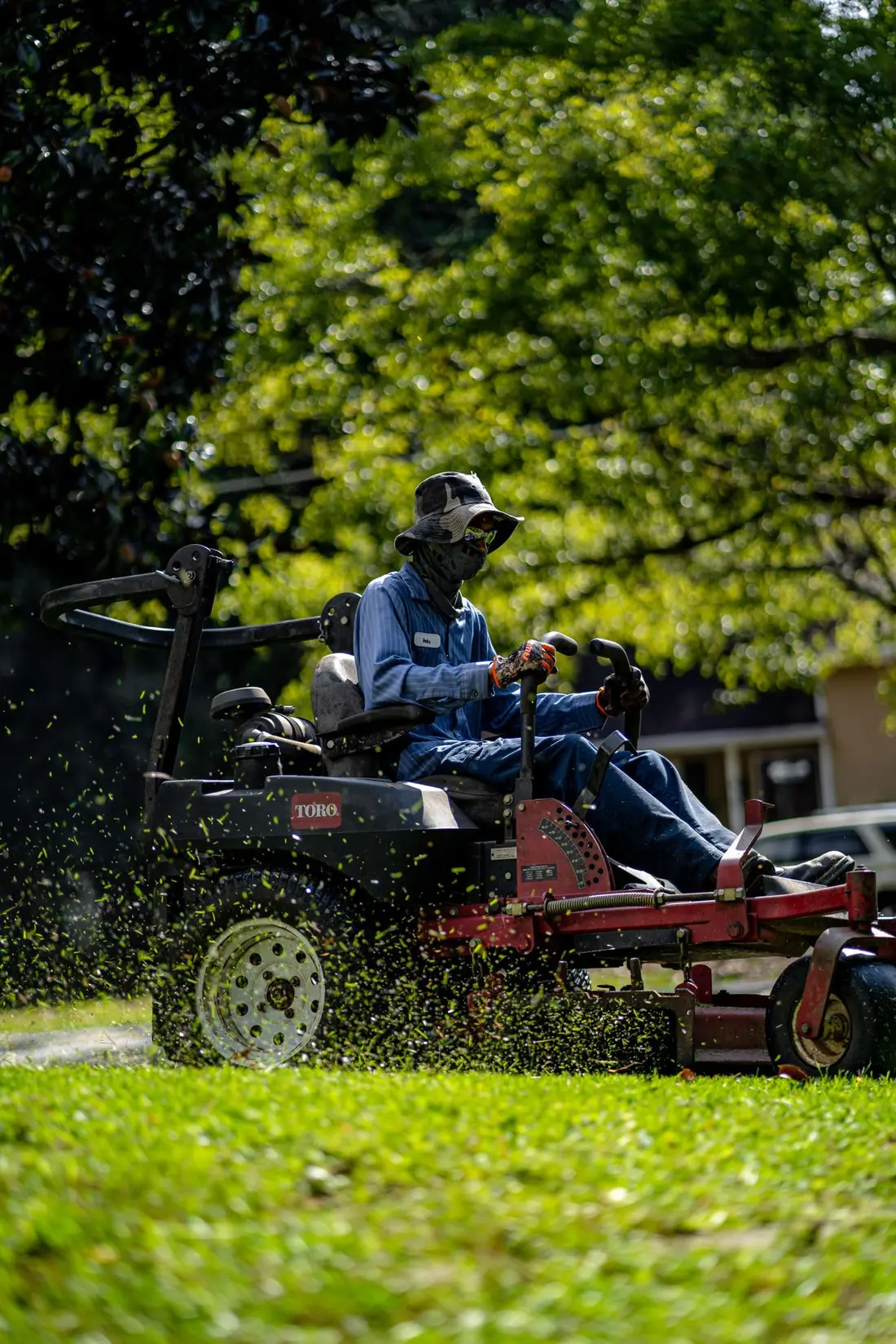
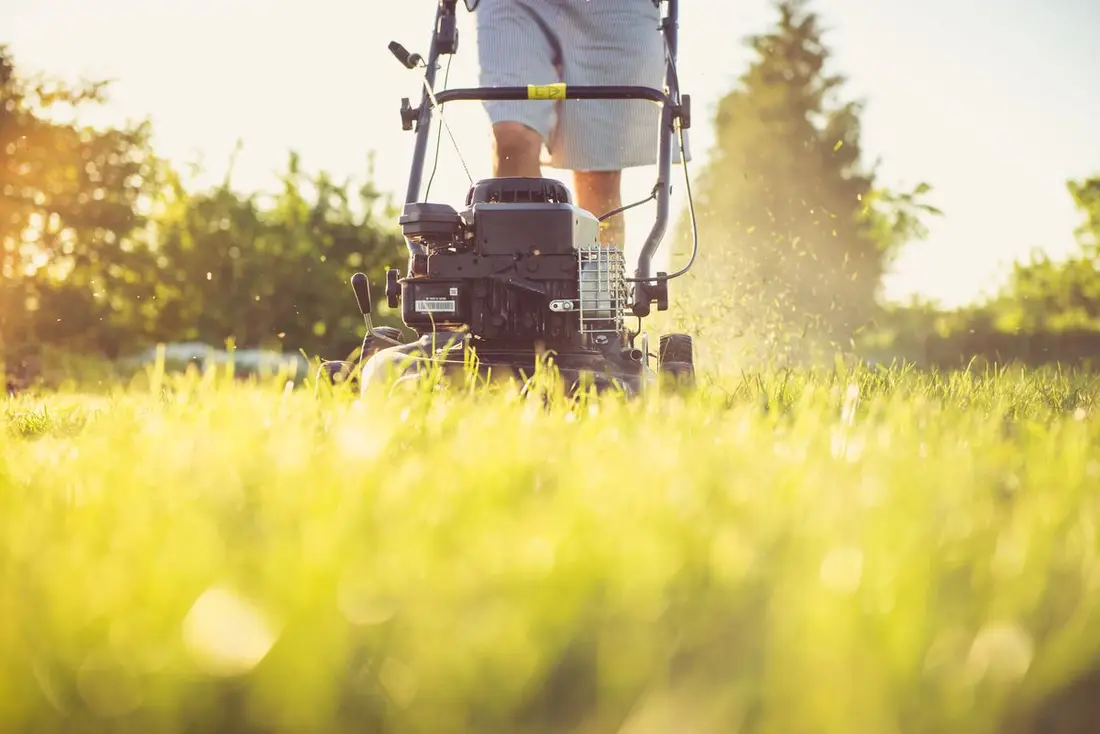
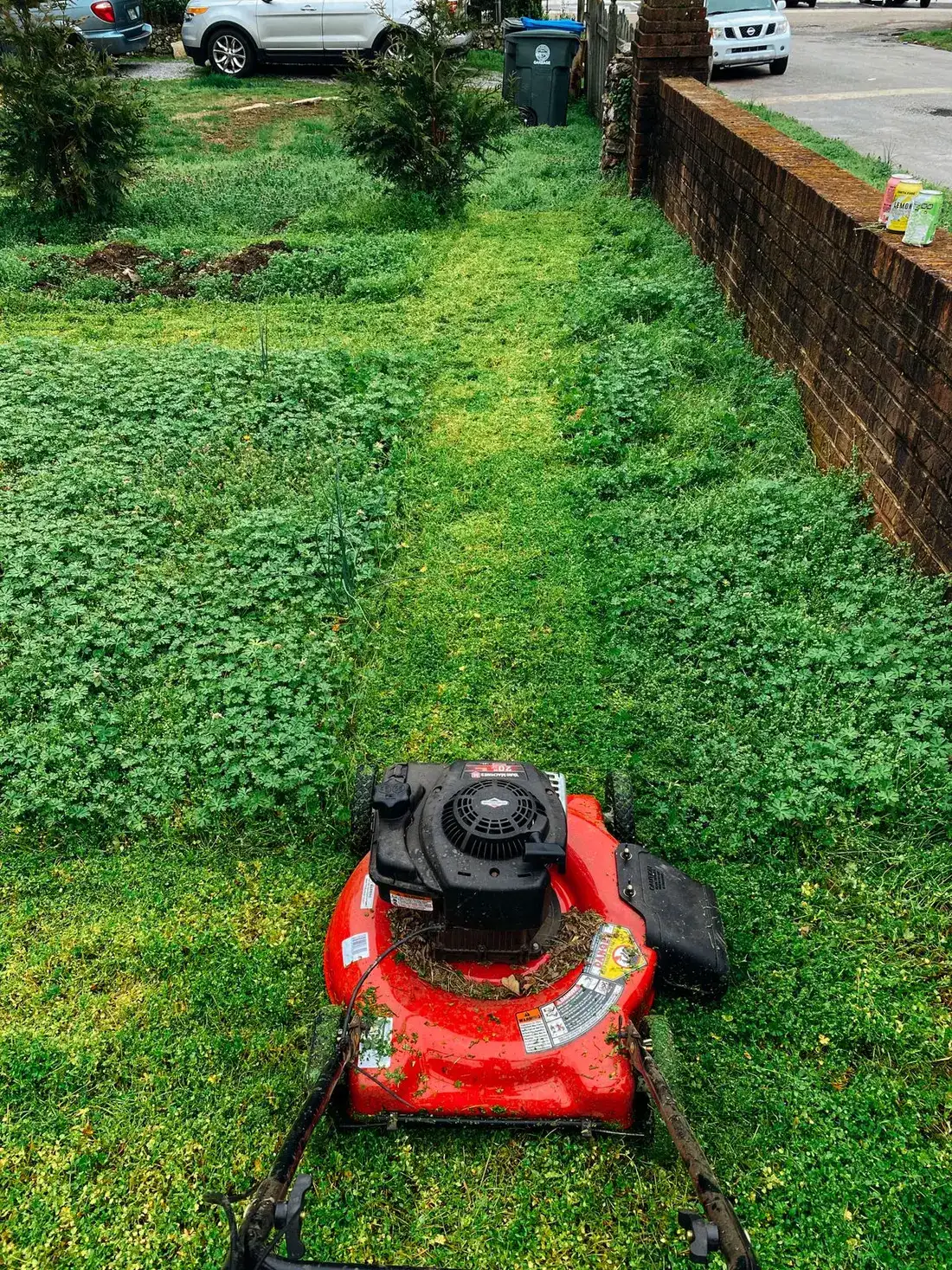
During fast spring and early summer growth, lawn mowing about once a week is typical for Bermuda and St. Augustine in DFW. The guide is the one third rule, which means never removing more than one third of the blade in one cut. Letting spring growth get tall and then scalping it stresses the turf and opens space for crabgrass.
How much water does an established DFW lawn need in July?
A common planning target is about 1 inch of water per week including rainfall, split across your allowed watering days. On black clay, cycle and soak watering in shorter repeated cycles soaks in better than one long run that ponds and runs off. Watering early in the morning reduces evaporation loss and helps the lawn dry during the day.
Why does water run off my clay yard before the sprinklers finish?
Houston Black and related vertisol clays absorb water fast through cracks when dry, then swell shut and absorb very slowly once wet. That is why a long single cycle sheets off to the sidewalk. Shorter cycles with rest periods, plus aeration on compacted areas, help water enter the root zone instead of leaving the yard.
What is aeration and does clay really need it?
Aeration pulls small soil cores from the lawn so air, water, and roots can move in compacted clay. DFW yards with foot traffic, play areas, and mower traffic on wet soil compact quickly, and compacted turf stays thin no matter how it is fed. Aeration during active growth in late spring or early fall lets Bermuda and St. Augustine fill in the opened soil.
When is weed control applied for crabgrass in North Texas?
Spring weed control for crabgrass is timed before germination, when soil temperatures reach about 55 degrees F for several days, which often means late February to early March in DFW. A second fall window targets winter weeds as soil cools. Missing the spring window means the plan shifts to spot treatment and to thickening the turf so next season starts with fewer gaps.